
Get your CRP hat on
The Communication Regulation Partner's many roles, & how to navigate them

This is the 2nd post of the Possibilities in Communication Companion Series, and it’s relevant to every spelling team, whether you’re on the Journey to Open Communication or exploring Open Communication & Beyond. I recommend coming back to this post, or the lessons in this post, regularly, even if you’re part of an already-fluent communication team.
Key Points
This post provides a holistic overview of the Communication Regulation Partner (CRP) role, including:
The long-term, big-picture view of your practice as a CRP - building your speller’s trust in your ability to be the “guardrails” for their body & regulation even in fluent communication
Maintaining the integrity of the CRP role, with a special note for family CRPs
How learning to observe your speller is critically important to your future progress together
Being patient with yourself as you work on your CRP skills
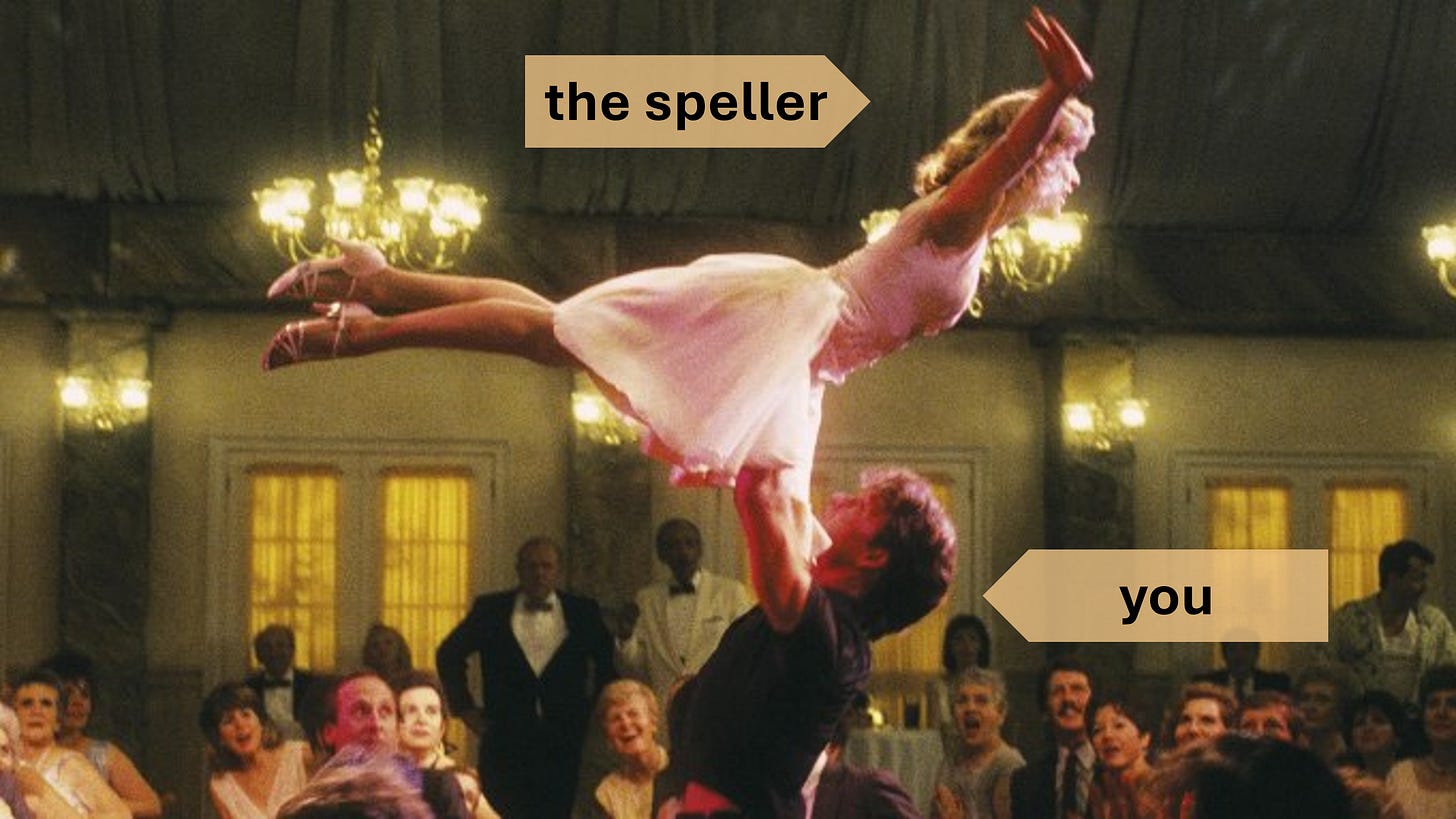
A relationship built on a lot of practice & earned trust. Even in fluency, the speller will only feel comfortable soaring if they know you’re there to catch them as needed.
Introduction
The CRP role is often misunderstood and underestimated. I remember being largely mystified by what it was that I was supposed to be doing when I first started spelling with my brother, and though we did manage to get fluent despite my ignorance, it would have been a smoother, faster process if I’d been properly oriented to what a CRP actually does!
There are 2 extremes when it comes to misunderstanding what a CRP does:
(1) The skeptics: The CRP is controlling what the speller says, influencing what they spell through Ouija board antics and pointing them to specific letters
(2) The “spelling is magic!” folks (i.e., people who haven’t done it!): The CRP simply places the board in front of the speller, doing nothing else, which means that it’s super easy and anyone can pick up a board and plop it in front of the speller without any prior practice or guidance
Of course, both of these are way off.
What is it that the CRP does, then?
The ideal CRP supports the speller’s ability to access their chosen letters to communicate their own thoughts, through:
Motor coaching that supports the speller’s body through apraxia, enabling the speller to get their eyes and finger to their own letters
Providing an emotional safety net and responsive co-regulation as needed (remember, communication is a very vulnerable act)
Earning the speller’s trust that the CRP will be able to help keep them on track, e.g., to act as “guardrails” for the speller’s body and regulation during communication, and to maintain clean, accurate spelling technique over time (using the Dirty Dancing reference from above: that they can run and leap into open communication, and that the CRP will be there to catch them)
Safeguarding the integrity of the speller’s communication, protecting the speller’s energy from inappropriate demands, and advocating for the speller’s right to be heard
Building trust with the speller in their ability to do all of the above through mindful, regular practice
There will be a lot more on each of these points in future posts, so don’t worry if it’s not all clear or if you have questions (also, please do ask in the comments or in the chat if you do!).
It is certainly possible to get to fluency with your speller without fulfilling all of those roles. But I believe that my success in spelling with Danny is that I naturally fell into those roles - they just seemed to be the right thing to do, even though (as I mentioned) I didn’t fully understand the mechanics of what I was doing - and I have been able to operationalize this many times over with my speller clients. And I have observed fantastic CRPs, often mothers of some of the most actively engaged spellers in the advocacy realm, doing all of this.
The rest of this post is for paid subscribers only. To access a 14-day free trial, click here!
